Hollywood Pueblo Revival by Robert Stacy-Judd
- Mar 8
- 3 min read
Pueblo Revival architecture is a rare sight in Hollywood! But if you‘ve ever driven on Crescent Heights Boulevard, there‘s a chance you passed this Robert Stacy-Judd gem and never noticed.

This adobe house at 1514 Crescent Heights Boulevard, just north of Sunset Boulevard, was built in 1924 by architect Robert Stacy-Judd while he simultaneously designed the Aztec Hotel in Monrovia. It was his first attempt to utilize Mayan motifs in domestic architecture—and he had an ambitious vision, based on the original sketch (pictured below).

The finished home is an assembly of cubical structures, with the living quarters (two bedrooms and a bathroom) on the north side, opposite the service rooms (kitchen, breakfast room, and maids quarters).
In between, a long living room is bookended by glass “commanding views of cool shrubbery, grass, and water.” The ceiling is slightly pitched, despite a flat roof, and supported with exposed wooden beams. The dramatic fireplace is Kiva-esque with an arched firebox opening. The rear of the room is a series of French doors leading to a loggia with Aztec-style pillars, patio, and model pool all enclosed by pergola.

Curb appeal was created by tiny gardens on either side of the house and a semi-circular pool beneath the living room’s massive window. Low walls in the front were “arranged with artistic feeling” but also practical: even the slightest breeze could circulate through them on a hot day.
The Pueblo Revival gem was acclaimed in 1925 as “a reminder of the fact that architecture is the art of planning and building; it is more than the ability to decorate construction.”

That sentiment makes the historic home’s fate a heartbreaker. It began in 1980 when Raymond Bilbool (longtime banquet manager at Chasen’s) closed off four windows and changed the zoning to commercial. The next owner, a psychologist, converted it to a medical office and paved over the backyard for six parking spots, in 1983.
Four decades later, 1514 Crescent Heights still has signs for “client parking,” but I can’t find any businesses associated with the address. These days, overgrown vegetation has consumed Stacy-Judd’s architectural achievement. The grass is dead. The “tiny gardens” are weeds. An unruly sago palm blocks the living room window. Most offensive is the shed in the front yard.


Twelve miles west of here, Stacy-Judd built a similar residence, the Zuni House at 710 Adelaide Place in Santa Monica. Despite designation as a local landmark, in 2019 the new owner operated the house as an illegal 36-bed hostel, prompting SM City Council to immediately tighten the home-sharing ordinance.

There is still some original charm inside the Zuni House, although a cheap remodel destroyed the kitchen and bathrooms.
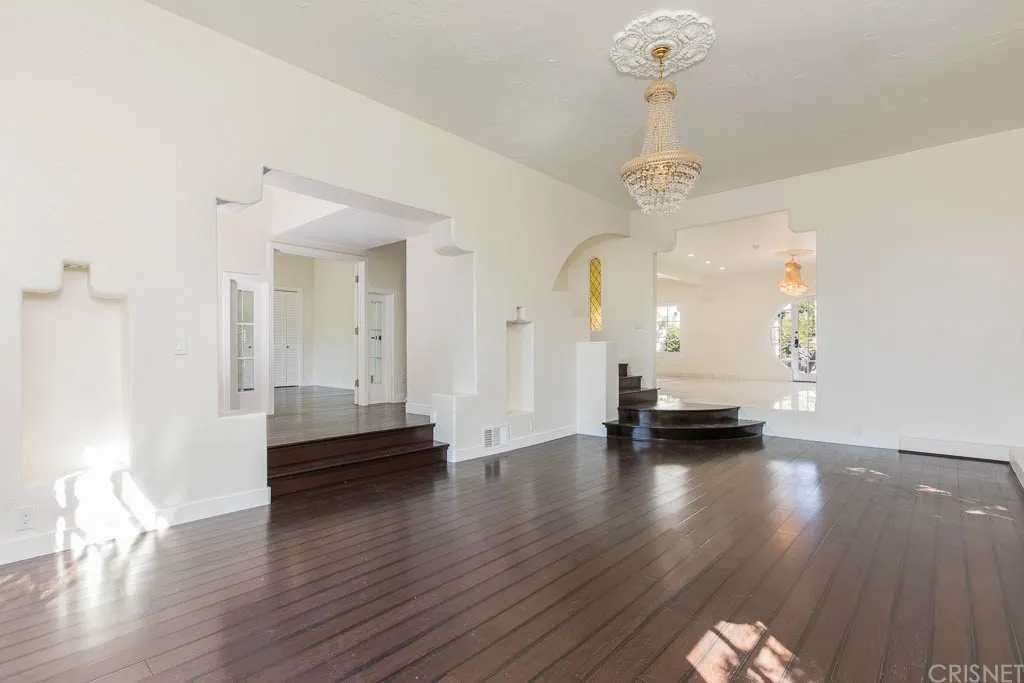
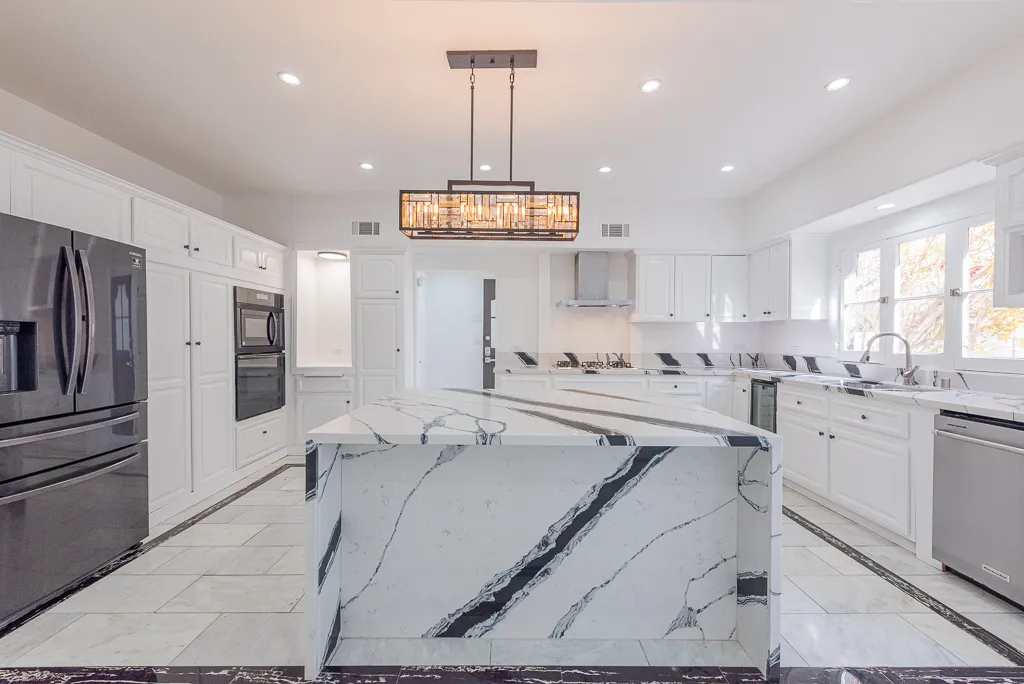
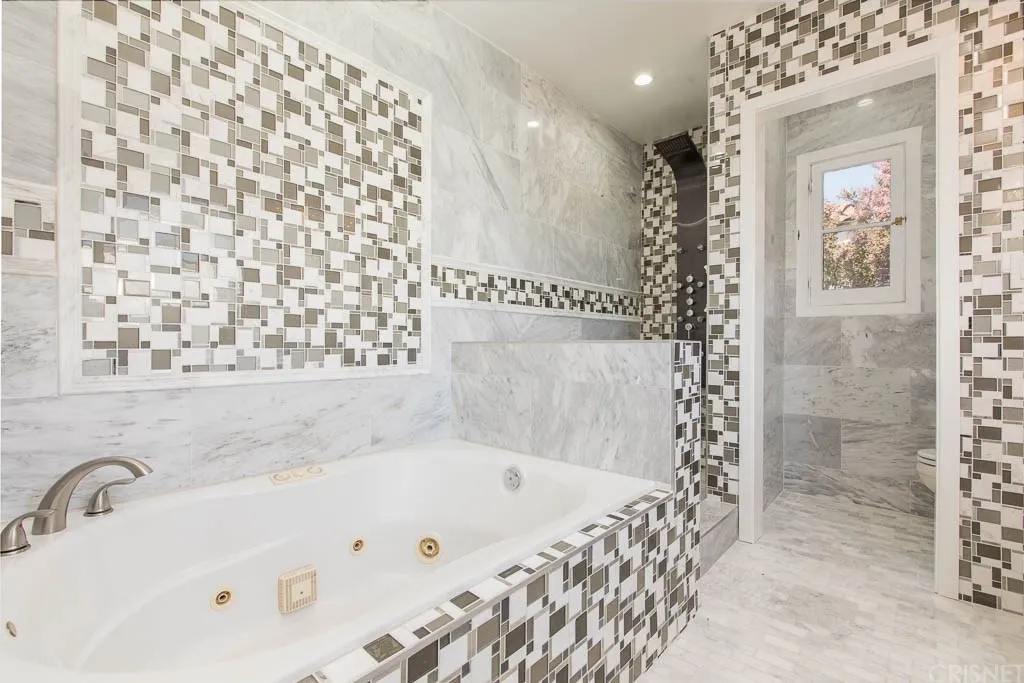
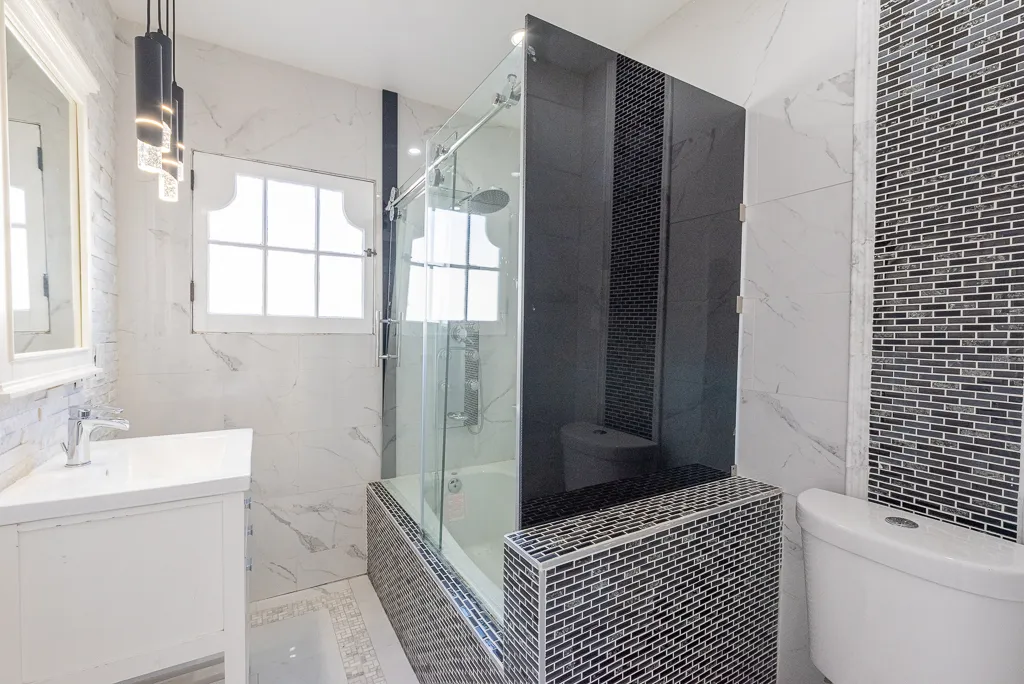
Another Stacy-Judd gem is currently available to rent: one of the two Atwater Bungalows in Echo Park. The Pueblo-Mayan Revival home has stepped doorways and fireplaces, eucalyptus ceiling beams, tile bathrooms, and original light fixtures with mica shades.

As for the Aztec Hotel, a national landmark, it closed for renovations in 2012 and never reopened. In July 2025, it went on the market for $15 million.

According to the listing, “the property is in need of some attention to the interior.” Photos indicate people are living in the historic hotel and using its facilities. Although it looks like a squatter situation, rumor is the owner's family occupy several rooms.
Craig Owens, of Bizarre Los Angeles, posted photos on Instagram documenting water leaks that have damaged the stenciled ceiling.